Showing posts with label Holidays. Show all posts

Tuesday, December 29, 2020

Hanukkah—To Serve The Creator


961.1Question: Is it possible to trace in the events of the second century BC, when people were divided into Maccabees and Hellenized Jews, the current division in the State of Israel?

Answer: I don’t think so. I do not see that there are people in Israel who want to be corrected. No one believes that we are in a spiritual descent.

In the time of the Maccabees, there was a battle for ideology: how people should advance, how to serve the Creator, i.e., achieve the principle of “Love your neighbor as yourself.”

Does anyone today have a method for achieving this spiritual rule? Do you see it in the program of any party or any part of society? And in those days, there was.

Rabbi Akiva and 24,000 of his disciples, and many others, believed that the principle of “Love your neighbor” must be fulfilled. But they could not resist their egoism because the rest of the people were heading in the opposite direction.
[275645]
From KabTV’s “Spiritual States” 12/16/19

Tuesday, December 22, 2020

Hanukkah Is A Celebration Of The Victory Of Light Over Darkness


600.01Comment: The holiday of Hanukkah is called the celebration of the victory of light over darkness, purity over conformism, spirituality over corporeality. And I think, clearly this is not only a Jewish holiday. The whole world is now on the threshold of victory or defeat of light over darkness.

My Response: There are actually no Jewish holidays. This is the interaction between the quality of bestowal, love, and the quality of reception, hatred, which always fight with each other.

Question: Was there a day in history when the forces of light defeated darkness?

Answer: Yes. The forces of connection.

Question: The forces of connection, of love, suddenly defeated the darkness in this egoistic, dark world of ours. Was there such a fragment in history?

Could you reveal it? How can we expand this fragment now and bring it to the present? Everyone is interested in the present time and only few people are interested in history. How can we bring light, the holiday of Hanukkah to this melancholy, to this despondency of humanity?

Answer: In general, this is a constant, ecumenical opposition between Rome and Jerusalem. Rome is power, it is strength, the conquest of Europe, the conquest of all the savage tribes that lived in Europe then. It is no secret that almost until the 10th century people there lived in trees, underground, and so on. There was barbarism in Europe, and they ate each other.

And Jerusalem wanted to bring to the world a completely different law: the law not of power, not of supremacy of authority, but of the spirit. This was the motto, the goal of Jerusalem. Of course, people were not ready for this.

Question: Is this the time when the Temple was built on the height of love for the neighbor?

Answer: Yes, for a thousand years from the 10th century before our era to year zero of our era, there was a struggle of what would overcome. Eventually, Judea fell. And at the end, when it was already crushed, during the fall, there was a great uprising. It was led by the Maccabees. It was the Maccabees who were carrying this light. This last surge in the fight for ideals marked Hanukkah.

Question: This was a fragment of history. How can we transfer it to our time? What is Hanukkah for the world today?

Answer: Hanukkah is an image of light, bestowal, love, connection of all and everything no matter at what level. The main thing is the good attitude of everyone toward everyone, above all prejudices, religions, philosophies, above everything.

In this dark time, there is an opportunity to tell the world what it should be like. This is because the advantage of light is precisely over darkness. And also because the world today, during these 2,000 years, has already been completely imbued with this ideology of Romans and Greeks.

Question: That is, with complete materialism?

Answer: Yes. Since the world has realized where it is heading, where it is, and also its end, today it is already possible to tell, explain, and try to pull the world to look in a different way, with different eyes. We are not going to conquer the world; we just want to explain to it that it is falling and that this is very threatening.

Question: So, is this holiday very relevant and necessary?

Answer: Of course.

Question: How can a person now light this little fire in himself?

Answer: It is very simple. We have nothing else left but to turn ourselves inside out, to begin to negotiate between all our hatreds, adversities, desires to destroy, humiliate, and subjugate each other, and so on. We should stop playing these games.

Today we can say: “Let us remember, let us see what those true ancient Maccabees, the Jews, were talking about.” They talked only about restoring the kingdom of understanding, mutual help, and love between all the people in the world. Not on an egoistic basis because it is impossible—we would be building something unsuccessful again—but on the basis on which the wisdom of Kabbalah is founded.

There is a force in nature that can reveal itself and subjugate our egoism. This will happen. I do not just believe it, I see it coming closer every day.

It is on the ruins of the old world, and now we see how its last bastion that is built on capital is crumbling, and crumbling, and crumbling, that a different world will be built: a world of mutual respect, love, opposite to the past one.
[275623]
From KabTV’s “News with Dr. Michael Laitman” 12/7/20
Monday, December 21, 2020

Hanukkah—The Most Childish Holidays


200.01

Question: It is interesting that Hanukkah and Purim are two great holidays not described in the Torah. Why are they considered the most childish holidays? On Purim, children dress up in carnival costumes, on Hanukkah they sing songs and eat sweet doughnuts.

Answer: The fact is that we have not yet reached these states in our world, and therefore, it is all personified in children. A child who is looking to the future as if shows us that we must reach those states that have not yet occurred.

Historically, these states have taken place but not within a person. Internally, we have not yet set ourselves up for the holiday of Hanukkah and then for the holiday of Purim.

Question: So it is like a game. Children are always associated with games. So here we have to play this state?

Answer: Yes. The correction of small vessels is called Hanukkah (Hanu-Ko, stopover). This is an intermediate state, half of the correction. And the second half of correction is Purim. We are yet to go through both states—both the people of Israel and the whole of humanity.

Question: Why is it customary to eat doughnuts on Hanukkah?

Answer: Oil symbolizes the desire to receive and dough, the power of life. Oil must saturate the dough because the power of life comes to us from flour. Since then, it has been the custom to fry the dough in oil.
[275609]
From KabTV’s “Spiritual States” 12/16/19

How To Light The Light Of The Creator?


524.01How can we light the light, meaning reveal the Creator? To do this, we need three contradictory components: a jar of oil, a wick, and a fire. Yet, how can we put them together if the oil itself does not burn, the wick itself also does not burn, and neither oil nor a dry wick can support the fire?

The fire burns only if the wick is contradictory to the oil, and therefore absorbs it. We do not want to receive spiritual work, and yet we are forced to approach it, and then we absorb spiritual qualities from it against our will, and become imbued with the importance of bestowal, self-nullification, and love of friends, as a wick absorbs oil.

This is what happens, whether we want it or not—another convention, another lesson, reading of articles, meeting with friends—time and time again we absorb the oil into the wick, despite the fact that we consider this work worthless. I do not want this work, and I only dream of rewards, of discoveries, so that I can learn everything, control everything, and feel everything, as my egoism imagines.

However, I do not have a choice, and I perform actions that allow me to absorb oil like a wick. I am still getting permeated with the material that the wisdom of Kabbalah provides, and in the end I will receive enough material inside, connect with my friends, and our light will light up.

Then, I will see the true results of this entire process, I will reveal the Creator within the created beings that is bringing us a new state, faith above reason, which is called Hanukkah, a parking in the middle of the way.

Our whole life is made up of contradictions because otherwise we would not distinguish the difference between darkness and light. We would be like animals that do not feel their “I,” do not feel themselves. In order to understand who the man is, it is necessary to rise to a higher level than the man and study him from there.

The wick is all that I neglect in spiritual work, all that I resist. I have resistance to the oil, but I am trying to connect the oil and the wick together, and then I reach the light. Then I begin to understand what is happening to me.

If the oil and wick burn out, then there is nothing left to burn and darkness comes. It is the same with a person when he has exhausted all his efforts and all his burning, he loses the light and returns to darkness again. If he wants to keep the light, he must make an extra effort, which is called a wick, and add his burning, which is called oil because the light has nothing else to light up on and rise on.

After such overcoming, a person is rewarded with receiving the light of the Creator that illuminates his soul and is called the light of Hanukkah, that is, the light of absolutely good open upper providence.

To the extent that a person can sacrifice his egoism for the sake of connection in a group that wants to advance toward the purpose of creation, he makes  a wick that absorbs oil out of himself and of the group. Initially, no one wants this and considers this despicable, but since we are all connected, we make a wick from ourselves, twist all the threads into one thick bundle.

One thread cannot absorb oil, but when ten threads are twisted together, there is an empty space between them that sucks in the oil. The oil goes up the wick, and we can light it up at the very edge of the wick.

We do not want this work, but we agree to connect together and let the oil go up in us, over our threads twisted together. The oil rises, not through the threads themselves, but through the gaps between them, through the connections of the friends with each other. If the friends try to connect despite their differences and are together, then the oil begins to go up between them and the Creator lights the candle, that is, begins to become revealed.
[275482]
From the 2nd part of the Daily Kabbalah Lesson 12/15/20, “Hanukkah”

Hanukkah—The Miracle Of Hanukkah And The Material World


627.1Question: It is said that a miracle happened on Hanukkah: the oil, being enough for one day, burned for eight days. Do you think this could have happened?

Answer: It is up to us. If we strive to ensure our properties to be equal with the properties of the Creator, that we participate in kindling the light in the world in order to illuminate it with the qualities of love, kindness, and connection, then such an effort is sufficient on our part. This comes from our side, Malchut, and the rest is given from above.

Question: Do you think the miracle of Hanukkah really could have happened on a corporeal level?

Answer: Why not? Our world conforms to general laws. If we fulfill them, we can do everything. There are more and more miracles in our world every day, but we simply do not notice them because we are included in them. And if we could see them from the outside, they would be miracles to us.

Question: So, this is not an allegorical description?

Answer: Of course. Absolutely everything that is written in the Torah must and will happen in our world. I do not see any miracles in it.

If a Papuan comes to me, for example, and I press the switch and the light comes on, he will fall on his knees before this phenomenon. Is it a miracle or not? It is a miracle for him but not for me.

If we were now at the first spiritual level, then everything that happened there would be a miracle for us.

Comment: But if you say that these are laws, then any person could repeat them. And I don’t think anyone can repeat that today.

My Response: Because we are not at that level!
[275544]
From KabTV’s “Spiritual States” 12/16/19

Hanukkah—Why Does The Menorah Include Eight Candles?


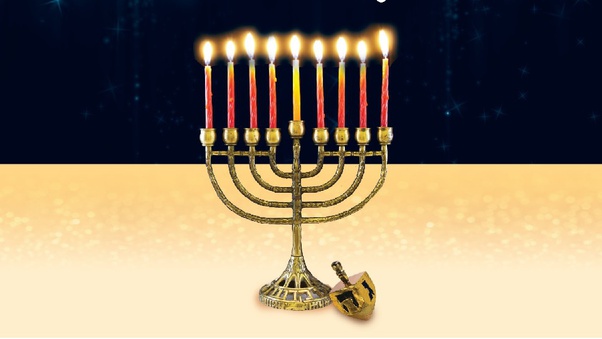
632.1Question: What is a Menorah? Why does it include eight candles?

Answer: From the highest quality (Keter) to the lowest quality (Malchut), from the quality of the Creator to the quality of creation, there are eight stages, eight Sefirot, excluding the highest and the lowest.

Therefore the Menorah is lit for eight days, on the eighth day the newborn is circumcised (Brit Milah), etc.

Question: How did the Kabbalists know that the Menorah should be in this form?

Answer: Kabbalists act according to their inner vision. They feel it from the correlation of their inner attributes. The connection of these attributes appears to them in this form. Moreover, this is how our world appears, according to our desires. In fact, it does not exist; it is simply that our materialized desires manifest themselves in front of us.

Question: According to Kabbalah, oil is the egoistic desire, the wick symbolizes the screen, and when there is a screen, an anti-egoistic quality, a force covering the egoistic desire, then fire appears. What is fire?

Answer: Fire represents the light of life, knowledge.
[275490]
From KabTV’s “Spiritual States” 12.16.2019

Hanukkah—Spiritual Temple


631.2Question: What is a Spiritual Temple from the point of view of Kabbalah?

Answer: Spiritual Temple is our soul —of each one of us and of all of us together—integration of all our desires striving for equivalence of form with the Creator.

We must unite our desires in such a way that in our connection, in bestowing to each other, we can reach a state that is balanced between us. And then in it, according to our efforts, we will find the upper force, the quality of bestowal and love called the Creator.
[275435]
From KabTV’s “Spiritual States” 12/16/20

Hanukkah—The Greeks And Romans Inside Us


631.1

Question: What is the difference between the Greeks and Romans inside us?

Answer: The Greeks are egoistic thoughts directed toward knowledge and philosophy. And the Romans are egoistic actions directed toward working with coarse desires.

Question: Let’s say I want to become famous, to glorify myself. Is this called the Greeks in me? Are these the desires that need to be corrected?

Answer: No. We are talking about correction on the spiritual level. Both the Greeks and Romans are states that come to a person when he really wants to expose himself to the quality of bestowal. Then he begins to fight with his egoistic desires and sort them out internally into Greeks and Romans.

In other words, there are desires of our world when you want to use someone for your own sake, and there are desires related to the Creator. If the Creator reveals Himself to man and he wants to use the connection with the upper force for his own sake, then these desires are called egoistic: Greeks, Romans, and Egyptians. They need to be corrected.
[275389]
From KabTV’s “Spiritual States” 1/14/20

Why Is Hanukkah Called A Miracle


294.4The holiday of Hanukkah is a special time. You see, our world is a projection of the spiritual world and it contains various symbols of spiritual renewals and corrections due to our work.

Therefore, during the year we go through good times and special states in this world as symbols of our progress in building the soul, restoring the spiritual vessel, the common soul of Adam HaRishon, which was shattered.

On this path, from the most broken state to the fully corrected one, we pass important points: the beginning of correction called the New Year (Rosh HaShanah), then the recognition of shattering: the Day of Atonement (Yom Kippur), and correction by the surrounding light: Sukkot. The next stop on this path is Hanukkah, which symbolizes rising to the state of Bina, the stage of bestowal.

We celebrate these holidays in this world, but of course, all their manifestations take place on the spiritual level. If we reach faith above reason to the fullest extent, this is called Hanukkah, and if we rise even higher to receiving in order to bestow, it is Purim.

Each person and the whole world must go through these states in their correction, correcting the shattering of the single soul of Adam because we are pieces of that soul.

Hanukkah is called a miracle because we cannot connect with each other without help from above, without the force of the Creator. This connection happens above corporeal nature, like a miracle.

Corporeal nature is egoism, the will to receive, which is drawn only to separation, distancing, its own authority. The spiritual nature, on the contrary, aspires toward connection and self-nullification. This is why Hanukkah is called a miracle, the attainment of the force of Bina.

We used to think that miracle is what we get for nothing: I did not work and suddenly won a million in the lottery—that is a miracle! And if I earned that million, I would not think it was a miracle.

But we invest a lot of effort in spiritual work, we try to achieve connection, perform a lot of actions, and then we are rewarded with the miracle of spiritual revelation. It is called a miracle because until it happens we do not know what we will come to. Only when it happens do we see: “So this is the spiritual world; I did not think it was like this! This is not what I imagined at all!” That is why this is called a miracle, but it takes a lot of work.
[275611]
From the 3rd part of the Daily Kabbalah Lesson 12/16/20, “Hanukkah”

Thursday, December 17, 2020

We Must Not Stop!


963.6Hanukkah is a special holiday, which means that the created being ascends from Malchut to the level of Bina. That is, it makes a restriction on its desire to enjoy for its own sake and is corrected by the upper light, and acquires the intention for the sake of bestowal. Bestowal for the sake of bestowal is the level of Bina.

Hanukkah is a celebration of the victory over the “Greeks. “Greek” is the name of the force that pulls a person into knowledge and not above it. This force appears precisely when a person who strives to approach the Creator already acquires some properties of bestowal, that is, he wants to reach the level of Bina.

The person put a lot of effort into his or her correction, invested in the group, in the ten, in the studies, and started to feel what bestowal is. And it is at this time that forces opposite to bestowal awaken in one: forces of separation that pull a person back into egoism.

It is written about this: “The Greeks attacked me.” Egoistic desires awaken inside me, and I must declare an internal war on them and fight the thoughts that one should not go by faith above reason to bestowal and connection. They persuade me to remain in this world, to settle as much as possible in it and enjoy it.

This is the approach of the “Greeks” as opposed to the approach of the Maccabees who call to rise to bestowal to the Creator. There is a war going on in a person between these two opinions. On one hand, I want to reveal the Creator and my soul. But on the other hand, life draws me in, urging me to enjoy its pleasures and not to dream of spirituality.

It is this war that Hanukkah symbolizes, and it takes place in darkness. A person feels that he has fallen under the power of the Greeks, that is, under the complete power of the desire to enjoy, and one has no chance of defeating it. This is how one was created by the Creator.

And then a person seeks inside himself at least some kind of connection with the Creator and finds one thread, grabs it, and prays for salvation. And when the Creator unites with a person and begins to pull him out of his egoism, He seems to light a candle for him. In this way, a person is gradually going out from darkness to light.

He lights a tiny candle of one’s connection with the Creator, and it cannot be smaller. But since the candle lit by the person is connected with the Creator and the Creator is eternal, this candle burns and burns, and the oil in it is not burning out. This is how a person exits one’s egoistic intention and reaches intention to bestow, Hanukkah, the level of Bina, bestowal for the sake of bestowal.

The virtual convention “Uniting Above Reason” at which we attained the previously unattained connection with the Creator just ended. Let us keep this connection and try not to extinguish it. Then we will begin to feel how inside this tiny connection, this thin candle, we are kindling an ever stronger fire until we reach reception for the sake of bestowal until the end of correction.

Hanukkah is only the middle of the path. Let us feel that we are halfway there, and that we just need to preserve the connection that we have reached at the convention and develop it more and more.

We must not stop. Stopping means death! Just continue all the time. We have reached the parking place, and we need to reconstruct ourselves in a new way in order to attack our egoism with renewed vigor and achieve even greater unity.

Everyone should feel that he has the strength to rise above his egoism. And now we can begin to unite on top of our egoism and the egoism of our friends, cover all crimes, both mine and his with love, and build a connection.

Let us begin to implement this law: “Love will cover all crimes.” This is our work after the convention. Good luck!
[275382]
From the 3rd part of the Daily Kabbalah Lesson 12/13/20, “Hanukkah

Wednesday, December 16, 2020

Hanukkah—Striving To Unite


747.01Question: The Greeks, led by Antiochus IV, captured the Temple in the 2nd century BC. There was a division of the Jews into Hellenized Jews, who supported the Seleucid Greeks, and Orthodox Jews led by the Maccabees. The Maccabees led the uprising and expelled the Seleucids from the Temple that had been captured and desecrated. When the Maccabees entered the Temple, they saw that the pure oil for the Menorah candles could only last for one day. But a miracle happened, the oil burned for eight days.

These are historical events that occurred more than 2,000 years ago. What do they mean from the point of view of Kabbalah?

Answer: After leaving Egypt, the people of Israel received the method of connection (mutual guaranteeArvut), which developed during 40 years of traveling in the desert. Gradually, they became more and more united according to the method received from Jethro, the father of Moses’s wife. Jethro was not a Jew, nor was his daughter, but as the Torah says, he fully joined them.

The term Torah comes from the word “light”(Ohr). The light of the Torah, which a person receives from above, is necessary in order to bring people together and turn them into one single whole.

Despite the fact that they are egoistically distant, opposite to each other, and each wants to rule over the others, with the help of the right environment and the upper light, everyone can subjugate himself to society and make sure that all the people in it are directed to the center of society to unite with each other.

This is what the Jews were doing for 40 years in the desert. After they reached the state of unity, the desert turned into a fragrant land for them, called the Land of Israel. “Land – Eretz” comes from the word “desire – Ratzon.” That is, their desire began to blossom and bear fruit.

They built the Temple that represented the result of their efforts that came from the connection between them. The Temple does not mean something materialized, not stones and wood, but the connection of their desires.

So they lived, fought, reconciled, and constantly chose new conditions of connection. They were changing because new egoistic desires constantly arose in them. Therefore, they had to attract the upper light called the Torah more and more, to unite and thus advance.

But they could not hold on to this and for some time they fell into the slavery of egoism called the Babylonian exile of the time of Nebuchadnezzar. And then, with the help of Queen Esther, they came out of exile and began to inhabit the Land of Israel again, i.e., the desire to unite and connect with the Creator.

So they moved on until they reached the state of building the Second Temple, uniting in one common vessel in which they attained the Creator. But it did not last long because once again there was a huge, tearing egoism between them. This is how the Second Temple was destroyed, the common vessel was broken, the mutual desires and intentions for loving each other that allow us to reveal the Creator.

It was at this time that Rabbi Akiva called on the Jews to unite and shouted that one should love one’s neighbor as oneself,” but they could no longer hear him. This is the state the people of Israel are in now, people who, on one hand, understand that it is necessary to unite, and on the other hand, are not able to force themselves to unite.
[275311]
From KabTV’s “Spiritual States” 12/16/19

“Why Did Hanukkah Start?” (Quora)


Dr. Michael LaitmanMichael Laitman, On Quora: “Why did Hanukkah start?

To understand why Hanukkah started, we need to first understand that the Jewish holidays describe special stages in our spiritual development, and also, that the Torah in general only discusses our spiritual development.

As such, Hanukkah is hardly mentioned in the Torah because it is a state we reach in our spiritual development which is still void of the reception of the light of the Torah. Rather, it is a state of preparation for spiritual corrections—the application of an intention to bestow upon our desire to receive—toward the state where we receive the upper light.

In terms of spiritual development, Hanukkah is the first Jewish holiday.

It expresses our development to the first spiritual level, which is called “Bina,” or “giving for the sake of giving,” a pure intention to give and bestow above the human ego that constantly wants to receive for personal benefit alone.

Achieving this state is possible if we surround ourselves with like-minded individuals who share a common spiritual aspiration, and who support and encourage each other to prioritize spiritual qualities of love, giving, bestowal and unity above our inborn egoistic reason, which constantly calculates in the opposite direction, i.e., how we can personally benefit from others.

Hanukkah is the initial level of unification we achieve by attaining a common intention to bestow above our egoistic desires. The word “Hanukkah” comes from two words, “Hanu Koh” (“park here”). It acts as the first pit stop of achieving the spiritual quality of bestowal above our corporeal egoism on our spiritual path to the attainment of greater and greater spiritual qualities upon the ego that also constantly grows.

By achieving the spiritual quality of bestowal and unity above our egoism, we gain the awareness that this is the way to attain the full revelation of the Creator—not just by applying an intention to bestow above our egoistic desire to receive, but that our desire acquires the nature of bestowal, and our reception of pleasure equates to our giving of pleasure.

This describes a very advanced spiritual state, which is called “reception for the sake of bestowal,” the reception of the spiritual light in order to give that light, through which we reveal the Creator via our equivalence of qualities, and enter into a mutual connection and dialog.

For the time being, we can focus on a target that is closer to us: that if we have a spiritual aspiration, we should seek a society of like-minded individuals with a common goal, and then in such a society, develop a new sense of bestowal and unification—”giving for the sake of giving”—above our inborn egoism, and by doing so, we will discover the state called “Hanukkah,” the first pit stop on the spiritual path.

Therefore, Hanukkah is our initial exit from a world of darkness—living in the confines of our narrow egoistic self-aimed interests—to a world of light—a world where the spiritual quality of bestowal and unification shines between us, in our common aspiration to unite above our ego.

Hanukkah is thus named “the festival of light.” It marks the start of our discovery of our spiritual state, how our soul lives and breathes according to qualities of bestowal that unify us all. It signifies the first spiritual correction of our desire: the transformation of our egoistic intention to receive for personal benefit alone to an altruistic intention to bestow and positively connect to others. This transformation is called “the Hanukkah miracle,” because of how we rise to a state opposite our inborn egoistic nature, which is all we know in our world, and which can only be conducted with help from a spiritual force that is outside our nature.

From this initial spiritual correction, we can continue our path of spiritual corrections, and advance to a state of full similarity with the spiritual quality of bestowal.

The custom of lighting candles on Hanukkah symbolizes these spiritual corrections that we carry out in our souls on the spiritual path.

The Greeks in the Hanukkah story are the egoistic reasons that calculate “What will I get out of it?” when confronted with an environment that encourages exiting our egos in order to give, bestow and unite with others. In other words, the Greeks symbolize egoistic desires to receive that awaken when we set ourselves up to rise to the first spiritual level of bestowal and unity.

On the contrary, the Maccabees in the Hanukkah story are the intentions to bestow, which require powerful unity in order to counter the war of the Greeks, i.e., to counter the egoistic reasoning that rejects the spiritual qualities of giving and uniting. The war between the Greeks and the Maccabees thus has nothing to do with nationalities, as it is an inner war between two opposed qualities of giving and receiving, or spirituality and corporeality.

Therefore, it is my hope that we will reach the understanding of how Hanukkah and the other Jewish holidays discuss spiritual corrections, our rising in unity above our inborn egoism. The more that we succeed in understanding, applying and spreading this awareness, the more we will see a positive human society blossom with harmonious connections of love and bestowal between people replacing the current egoistic and destructive ones.

Monday, December 14, 2020

Hanukkah Is A Way Out Of Darkness


611Hanukkah is the first holiday we celebrate in our spiritual development. The entire Torah speaks only about the spiritual development of man, and in fact, Hanukkah is barely mentioned there because this state has not yet reached the reception of the upper light. It is just a preparation for corrections.

Hanukkah is the development of man to the level of Bina, the first spiritual stage, bestowal for the sake of bestowal. And we want to come to this through our connection in the group, above our egoism, the desire to receive pleasure, above mutual rejection, and all the obstacles that prevent us from achieving unity.

The first stage of unity is called Hanukkah, “parking.” When we reach it, gain the power of bestowal, then we understand that this is a means to begin to comprehend the Creator after this step, no longer just through the intention to bestow, but through the act of bestowal, the realization of this intention in practice, in our desire.

This will already be reception for the sake of bestowal, the practical reception of the upper light for the sake of bestowal, which makes us similar to the Creator and opens our dialogue with the upper force: “I am my Beloved’s and my Beloved is mine.”

However, this will happen only later, and for now, we must acquire the intention to bestow on all our desires, that is, to achieve bestowal for the sake of bestowal, which is symbolized by Hanukkah, “parking” on the path to correction.

Hanukkah is a way out of darkness. After all, we do not see the spiritual world, the true reality; we live in complete darkness, locked inside our egoism. And if we want to correct these desires into bestowal, then we go to the light of bestowal. Therefore, Hanukkah is called the festival of light. We begin to open our soul and learn to use it correctly, light the light of mercy, Hassadim, within the soul.

If a person’s desire is corrected, if the power of bestowal is acquired, the light of Hassadim, then after the holiday of Hanukkah one can already begin to use it for receiving for the sake of bestowal, filling the soul with the upper light NRNHY and becoming like the Creator.

Hanukkah is a transition from darkness, from the desire to enjoy, to the light, the desire to bestow, and that is why it is called the festival of light. The tradition of lighting candles on Hanukkah in our world symbolizes the inner spiritual corrections that need to be made in your soul.

The enjoyment of bestowal for the sake of bestowal is that we rise above our egoistic desire. The miracle of Hanukkah lies in the fact that we ascend to the level opposite to the desire to receive pleasure: from Malchut to Bina.

Desires to receive pleasure within a person that resist spirituality are called Greeks. There is seemingly a war between the Greeks and Israel, but of course, this does not refer to countries of this world but only to spiritual concepts.

The Greeks are the desires to enjoy within each of us, the Maccabees are the intentions for bestowal, and the war is between those who want to act for themselves and those who call for bestowal. Such a confrontation occurs within each person.
[275268]
From the Daily Kabbalah Lesson lesson 12/10/20, “Hanukkah”

“What Is Chanukah?” (Quora)


Dr. Michael LaitmanMichael Laitman, On Quora: “What is Chanukah?

Chanukah (also spelled “Hanukkah,” Heb. “חנוכה”) signifies the beginning of our feeling the unified force of nature. It marks the initial penetration through the boundary between this world and the spiritual world.

The Hanukkah concepts and customs link to the crossing of this boundary between egoistic and altruistic perception, which requires rising above our inborn desires that prioritize self-benefit over benefiting others.

The Maccabees-Greeks war unfolds internally, within us, between our ego’s reasoning (the Greeks) and the tendency to unite by drawing the force of nature into our connections (the Maccabees).

But how can we possibly cross the boundary of our very human nature, which defines us as the egoistic beings we are?

In addition, our desires to unite, to love and to care about others is tiny compared to the ego, which constantly pressures us to enjoy at the expense of others.

It is on this dilemma that the miracle of Hanukkah comes into play.

Our persistence to unite above our desires for personal benefit attracts nature’s force of love, bestowal and connection, which is also called “light” in the wisdom of Kabbalah.

Even though we have comparatively very small desires to unite, to love and to care about others compared to our self-aimed desires, i.e., materialistic pursuits for money, honor, respect, power, control, fame and knowledge, by creating a social atmosphere that supports and encourages us all to rise above our self-aimed desires, then we direct ourselves to unite above our egos.

Eventually, by participating in such a society that values uniting, loving and caring each other above our innate desires to enjoy personally at others’ expense, we then end up feeling incapable of rising above our ego, since it our very human nature. In the Hanukkah story, this is considered as the Maccabees feeling incapable of defeating the Greeks.

At that crucial juncture, a miraculous light appears—the unifying force of love, bestowal and connection that dwells in nature, which gives us the energy we need in order to overcome our egoistic desires with a unifying, loving and giving tendency. That is the meaning of the Maccabees winning the war against the Greeks.

We prosper when we, on one hand, feel a necessity to win the war, but on the other hand, find ourselves out of options and in despair, i.e., under the attack of the Greeks. While under attack, we feel like we need to keep fighting with all everything we have, however with no success in sight. In any case, due to sensing a responsibility to win the war, we do not throw in the towel, because it would be like agreeing to be locked away in the ego’s solitary confinement.

At that point, the miracle happens—the illumination of the light of unity, love and bestowal. It charges us with its omnipresent energy, and we win the war.

The Hanukkah war is internal, taking place on the boundary between egoistic desires versus those of unity, love and bestowal. Our egoistic desires and thoughts are what filters our perception of the boundless force of love and bestowal surrounding and permeating us, and we revel in the revelation of this force when we win the battle for unification above our egoistic desires.

Sunday, December 13, 2020

“Hanukkah Offers Timely Reminder Of Need For Unity” (Newsmax)

 My article in Newsmax: “Hanukkah Offers Timely Reminder of Need for Unity

On Hanukkah, which begins tonight, Jews celebrate their victory over the Seleucid Empire, which attempted to entrench the Hellenistic culture and belief system among the Jews in the land of Israel. This is the going narrative. However, this epos is not quite what happened.

Although everyone knows that the Maccabean Revolt, whose victory we celebrate on Hanukkah, was a civil war between the Hasmonean family and their adherents against Hellenistic Jews, we conveniently tell ourselves that we fought against the Greeks (the Seleucid Empire practiced and promoted the Greek culture of Hellenism). The Seleucids joined the war on the side of the Hellenists only toward the end, but for much of the war, it was Jews against Jews.

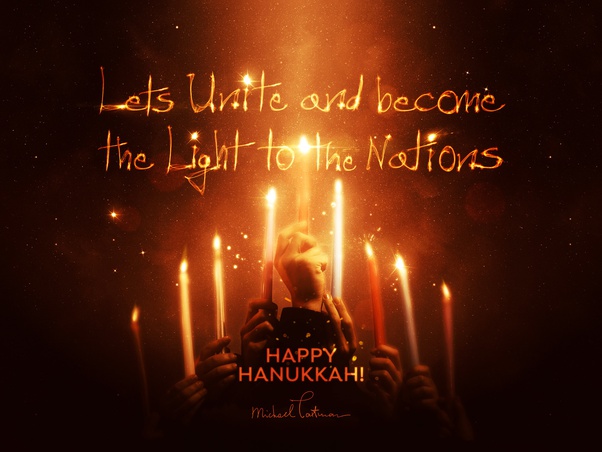
The war among the Jews stands for much more than a struggle for power; it is a clash of ideals, of paradigms, of perceptions, of reality. Judah Maccabee, the third son in the Hasmonean family, was the commander of the rebels against the Hellenists, but his whole family participated in key positions. The Hasmoneans were staunch believers in the ancient Jewish tenet of solidarity and mutual responsibility being the foundation of the nation. They believed that it was the role of the Jews to practice ”Love your neighbor as yourself” and be ”a light unto nations” by setting an example of unity above differences. Contrary to that, the Hellenists championed the Greek culture of worship of the self. The Hellenists put the ego at the center; the Hasmoneans put serving the community at the center of their wishes.

The struggle was not an internal Jewish squabble, but a fight over the vocation of the Jewish people — to save the world through its example. If the Jews relinquish their commitment to unity, then what is the purpose of the existence of Judaism altogether? Worse yet, if there are no Jews to unite and set an example, how will the world find unity?

The Hasmoneans believed wholeheartedly in the prophecy of Isaiah 42:6, ”And I will appoint you as a covenant to the people, as a light unto nations,” and the words of King Solomon (Prov. 10:12), ”Hate stirs strife, and love will cover all crimes.” They saw it as their vocation to illustrate how love can be more important to people than hate, how they can rise above it in unity and peace.

The Hellenists, who tried to ingrain the opposite approach, that the ego is king and we should serve ourselves, were therefore not only their worst enemies, but as they saw it, the enemies of humanity. The Hasmoneans did not expect the Seleucids to adopt their faith and principles, but also they would not allow their culture to be overrun by the Greek culture, since then there would be no one to perpetuate the mission that the Jews were given at the foot of Mt. Sinai, to unite ”as one man with one heart” and thereby be ”a light unto nations.”

The Hasmoneans won the war and reinstalled their culture, and to this day, we celebrate their victory. However, their victory was short-lived. Hellenism, they learned, was not an external enemy, but a wily serpent lurking within. Soon after their victory, they, too, began to lose their moral standing and their sons became increasingly corrupt.

In the end, the Hellenistic culture took over the entire land of Israel as the Romans, whose culture derived from the Greeks, conquered the land and exiled the Jews for two millennia. In fact, even today, although Jews are purportedly the sovereign in Israel once more, the culture of the land is still Hellenism, and there is no trace of mutual responsibility or solidarity. If the people of Israel remain this way, they will lose the land once more since there is no need for them if not for the purpose of the creation: to be a light of unity to the nations.

Israel does not need the patronage of any country. Its strength lies not in its army or economy, but in its unity. If it lacks unity, the backing of powers will sustain it only for so long. But if the people unite, they will not need anyone’s protection since they will have no enemies.

Today, no commodity is more required than unity, yet no commodity is more scarce. Its sole producers are the people of Israel, and they are busy fighting among themselves both in Israel and around the world. As the world looks desperately for solutions to its escalating conflicts, it will turn its eyes to the Jews and ask, ”Why are you making us fight?”

Then, if the Jews do not remember their covenant, to be a light unto nations, they will be crushed once more. But if they do unite, they will shine the light of unity throughout the world, and all of humanity will celebrate the victory of the Maccabees, the joy of solidarity, over the Greeks, the reign of egoism.

Thursday, December 10, 2020

“Is Hanukkah A Jewish Holiday?” (Linkedin)

 My new article on Linkedin “Is Hanukkah a Jewish Holiday?

On Hanukkah, which will begin this coming Thursday, Jews celebrate their victory over the Seleucid Empire, which attempted to entrench the Hellenistic culture and belief system among the Jews in the land of Israel. This is the going narrative. However, this epos is not quite what happened. Although everyone knows that the Maccabean War, whose victory we celebrate on Hanukkah, was a civil war between the Hasmonean family and their adherents against Hellenistic Jews, we conveniently tell ourselves that we fought against the Greeks (the Seleucid Empire practiced and promoted the Greek culture of Hellenism). The Seleucids joined the war on the side of the Hellenists only toward the end, but for much of the war, it was Jews against Jews.

The war among the Jews stands for much more than a struggle for power; it is a clash of ideals, of paradigms, of perceptions of reality. Judah Maccabee, the third son in the Hasmonean family, was the commander of the rebels against the Hellenists, but his whole family participated in key positions.

The struggle was not an internal Jewish squabble, but a fight over the vocation of the Jewish people—to save the world through its example. If the Jews relinquish their commitment to unity, then what is the purpose of the existence of Judaism altogether? Worse yet, if there are no Jews to unite and set an example, how will the world find unity? The Hasmoneans believed wholeheartedly in the prophecy of Isaiah (42:6), “And I will appoint you as a covenant to the people, as a light unto nations,” and the words of King Solomon (Prov. 10:12), “Hate stirs strife, and love will cover all crimes.” They saw it as their vocation to illustrate how love can be more important to people than hate, how they can rise above it in unity and peace. The Hellenists, who tried to ingrain the opposite approach, that the ego is king and we should serve ourselves, were therefore not only their worst enemies, but as they saw it, the enemies of humanity. The Hasmoneans did not expect the Seleucids to adopt their faith and principles, but they would also not allow their culture to be overrun by the Greek culture, since then there would be no one to perpetuate the mission that the Jews were given at the foot of Mt. Sinai, to unite “as one man with one heart” and thereby be “a light unto nations.”

The Hasmoneans won the war and reinstalled their culture, and to this day, we celebrate their victory. However, their victory was short lived. Hellenism, they learned, was not an external enemy, but a wily serpent lurking within. Soon after their victory, they, too, began to lose their moral standing and their sons became increasingly corrupt.

In the end, the Hellenistic culture took over the entire land of Israel as the Romans, whose culture derived from the Greeks, conquered the land and exiled the Jews for two millennia. In fact, even today, although Jews are purportedly the sovereign in Israel once more, the culture of the land is still Hellenism, and there is no trace of mutual responsibility or solidarity. If the people of Israel remain this way, they will lose the land once more since there is no need for them if not for the purpose of the creation: to be a light of unity to the nations.

Israel does not need the patronage of any country. Its strength lies not in its army or economy, but in its unity. If it lacks unity, the backing of powers will sustain it only for so long. But if the people unite, they will not need anyone’s protection since they will have no enemies.

Today, no commodity is more required than unity, yet no commodity is more scarce. Its sole producers are the people of Israel, and they are busy fighting among themselves both in Israel and around the world. As the world looks desperately for solutions to its escalating conflicts, it will turn its eyes to the Jews and ask, “Why are you making us fight?” Then, if the Jews do not remember their covenant, to be a light unto nations, they will be crushed once more. But if they do unite, they will shine the light of unity throughout the world, and all of humanity will celebrate the victory of the Maccabees, the joy of solidarity, over the Greeks, the reign of egoism.

Monday, October 19, 2020

The Holiday Of Sukkot: Joseph


509Joseph is called the righteous; a righteous is the foundation of the world. It is Joseph who carries man through his egoism and establishes his connection with Pharaoh. And then, with the help of Joseph, man connects with higher properties, with Moses.

Through Joseph we start to get acquainted with the upper system; thanks to him we can unite and try to discover spiritual qualities so that we get closer to the upper force and attain the Creator. Every spiritual attribute is perceived through Joseph, through the Sefira Yesod, through our connection.

Joseph is the righteous, the foundation of the world because only through connection, through Yesod do we attain all other upper spiritual qualities. Joseph in our work is the most necessary and closest feeling to us: connection in a group. Through the point of oneness, we begin to recognize the quality of Joseph.

The Torah tells how the brothers sold Joseph into slavery. They do not understand this property yet because they are higher than him and are not yet familiar with the quality called Joseph. They consider Joseph a younger brother and don’t want him to stand out.

The main thing about Joseph is that he leads us to unification. Joseph does not have his own individual qualities; he combines all other qualities in his striving for connection, and through him, to the Creator. Joseph is a common property in which all the other brothers are included and is revealed thanks to the growing desire to receive, that is, the Pharaoh.

And so, from the quality of Joseph, from Yesod, comes sustenance, the force of life, and the power of attainment. The revelation of Pharaoh also occurs through Joseph. At the beginning of the slavery in Egypt, the Pharaoh was kind and it did not feel like slavery at all. On the contrary, we developed, and all this with the help of Joseph. Joseph is the beginning of the revelation of good and evil in all our lives, and therefore, he is closest to us.

The quality of Joseph is realized through our connection. This is why it is called “Everyone,” combining all the properties in himself and connecting us with the Creator through them. Attaining Joseph is attaining the connection, the essence of our connection. This is the first step that takes us out of this world and leads to the attainment of the Creator, the upper spiritual world.

Joseph is like a tree that brings us all the fruits of life to us. It is the connection with the upper root from which all the good flows into the world. We eat from it, live thanks to it, reproduce, and multiply. It is the place where we connect with each other and with the Creator; that is, the place where we leave the feeling of this material world and enter the spiritual world. All this is done through the quality of Joseph, the closest degree to us.

It is known that in order to move even one step forward, we need to connect in the ten. Yosef is called “Everyone” because he combines all our properties together. Each of the ten people has their own different qualities, but if we rise above ourselves, we can be together. If we rise above our egoistic differences, each of us above their egoism, then we become similar, equal, and can connect to fulfill each other.

This is understood as one attains the Sefira Yesod, which is called “Everything.” When we rise above our egoism and come to faith above reason, to unity in the ten, we create a new spiritual quality that is common to all, called the Creator. It is born out of the bond between us as it is said: “As though you have made me!”

It turns out that by our union, we created the Creator; this is how He reveals Himself to us. The first contact with the Creator, with the upper force, the upper world, occurs through the quality of Yesod.

Distinguished guests, Ushpizin, who come into the Sukkah, organize the right environment for us. And Joseph is the last in this chain as if standing for Malchut.
[272163]
From the Daily Kabbalah Lesson 10/8/20, “Sukkot

Readers' Comments

Get Recent Comments Widget

Label Cloud

10 Sfirot (2) 125 degrees (2) 248 positive desires (1) 613 desires (1) 7746 PEOPLES ASSOCIATED (1) A Path of Pain (1) acting mind (2) Adam (6) Adam - The Common Soul (123) Adam ha Rishon (5) adam harishon (1) Adam the collective soul (3) adhesion with the Creator (6) advancement through affliction (1) ahead of time (2) altruism (1) America (1) Ancient Babylon (97) Ancient Jerusalem (3) Answer (2) anti-semitism (163) apathy (1) Arich Anpin (1) arts (2) arvut (16) ascent (3) Assiah (1) attain (1) attitude (1) Atzilut (2) authors of The Zohar (1) awaken (3) Baal HaSulam (67) babylonians (3) be avoided (1) be happy together (1) beast (1) begginer (1) beginning (1) Beginning of Change (2) beginning of creation (1) bestowal (12) better future (6) Better Person (2) Bina (3) biological body (3) birth (1) blows (1) body and soul (385) books (21) branches (1) Briah (1) caracter (1) caring (1) Change ME (1) Change the WORLD (2) changes (1) children (444) children values (2) collective soul (73) commandments (45) Completion of The Zohar (1) Concealment (3) congress (5) connect (3) connected (1) connection (4) conscious development (2) contests (2) Conventions (543) Conversations with God (1) conversions (1) coronavirus (498) corporeality (1) correction (7) Corrections (1) creation (1) Creator (40) Creator's attitude (1) Creator’s Invitation (1) cris (2) crisis (1373) current events (1) d (1) daily advice (19) daily lesson (613) Darkness (1) Deborah (1) depression (15) descent (3) desires (6) desires that devouring (1) dissemination (531) distance (1) Do I Have To Believe In God ? (1) doc (1) dreams (1) drugs (1) Dvekut (2) ecological crisis (4) economy (253) educ (1) education (1013) efforts (1) ego (3) egoism (566) emotional states (1) end of correction (1) endless (2) enlarge your word (1) environment (3) envy (2) escape (1) Eve (1) events (102) evil (1) evolution (36) face (1) Facebook (148) Fall And Rise (1) family (37) feel the lack (2) feelings (1) feels helpless (1) feels weak (2) force (2) free action (2) free choice (5) free will (237) Fresh Blood (1) friends (8) friends for ever (1) fulfill myself (1) fulfillment (2) Galgalta ve Eynaim (1) Galut (1) generation (4) genetic code (1) gentile (1) gestures (1) getting profession (1) global (3) global suffering (9) global warming (1) globalization (1090) gmar a tikun (1) goal. light (1) God (1) Good (2) goodness (1) goy (1) Great Assembly (2) greath father (1) group (1252) group Creator (5) group work (146) guarantee (2) Guidance (1) Hafez Hesed (1) happy (2) harmony (1) hates (1) hatred (2) health (654) Heart (1) Hebrew (2) history (7) Hochma (1) Holidays (345) Holocaust (1) Holy Torah (1) honest talk (1) honor (2) Hulda (1) human (1) human level (1) human society (2) humanity (3) Humour (2) I heard (1) Ibur (conception) (1) ignoble state (1) Imagine (1) Improve Education (3) impure desires (1) inanimated (1) incarnations (1) infinite fulfilment (1) Infinity (6) influence (1) inner states (5) Inner Work (644) integral upbringing (123) intense pleasure (1) intention (8) interconnected (2) interconnection (3) internal upbringing (1) Internet (34) Interview Rav Laitman (1) Iran (1) Israel (928) Israel Today (388) Israel vs Iran (1) Jacob (1) jewish (1) Jewish Code of Law (1) Judaism (1) kabbalah (5) Kabbalah Dissemination (158) Kabbalah for the Nation (14) Kabbalah study (830) Kabbalistic Authors (1) Kabbalistic source (14) kabbalistic wisdom (2) Kabbalists (3) kabblistics (1) Katnut (smallness) (1) kelim (2) klipa (3) klipot (1) knowledge (1) lack of connection (3) language of feelings and desires (1) language of Kabbalah (1) Last Generation (1) Lech Lecha (Go Forth) (1) lectures (6) lekabel al menat lehashpia (1) less concerned (1) li chema (1) liberalism (1) Life and Death (1) Light (12) Light that Reforms (5) ligth of love (5) Live A Spiritual Life (2) live in harmony (1) lo li chema (1) love (171) love of friends (1) lust (1) MAKE REAL CHANGES (1) makhsom (1) Malchut (3) man and woman (316) marriage (36) materialization (1) me (1) Meaning Of Life (133) merciful (1) Messiah (1) method of correction (1) Michael Laitman (1) mind (2) mistakes (2) Mitzva (1) Mitzvot (3) Mitzvot Lishma (1) Mochin (maturity) (1) motion (1) movies (2) music (68) Music and Kabbalah (2) mutual agreement (13) Mutual Guarantee (196) my beloved (1) my nature (1) myself (1) mysticism (1) nation (1) nations of the world (821) nature (4) need (1) nefesh (1) neshama (1) new (2) New Life (1013) New Media (1) new publications (606) New World Order (2) news (500) Next Generation (1) none beside him (1) notices (1) Now (1) Ohr Hozer (1) Olam Ein Sof (1) oneness (3) opportunity (1) our perception (2) our purpose (1) our survival (1) our world (5) ourteen Commandments (1) pain (1) partsouf (1) past (1) Path of Torah (2) peace (3) perception (629) perception of reality (13) perfection (1) Pharaoh (1) philosophy (2) pleasure (3) point in the heart (6) politics (12) pray (1) prayer (217) prayer and intention (109) present (1) Pro-Choice (1) Pshat (1) psychic powers (1) purpose (4) pyramid (1) Q&A (671) Questions (13) Quora (267) Rabash (20) racism (1) Racism is Natural (1) raising MAN (1) Rashbi (1) Real Crisis (1) realize (1) Relations (1) relationships (1) religion (184) Religious Ideal (1) Renew (1) Reshimo (1) reshimot (1) responsability (1) responsible (1) restriction (1) revelation (2) rewarded (1) Righteous (1) roots (1) Rosh Hashanah (1) Salvation (1) Samech (1) school (1) science (223) science and kabbalah (2) science of Kabbalah (1) Secular Ideal (1) selfishness (1) separation (1) serpent (1) sex (1) Shabbat Page (9) Shamati (1) Shechina (1) similarity of form (173) sixth sense (1) smallest forces (1) society (275) society of the future (86) songs by Arkadi Duchin (1) soul (10) soulmates (1) souls (7) sources (9) space (1) spir (1) spirit (1) Spirit Of Life (1) spiritual (4) spiritual body (1) spiritual desire (1) Spiritual Embryo (1) spiritual force (1) spiritual forces (2) spiritual gene (1) spiritual goal (3) spiritual matters (1) spiritual path (4) spiritual teacher (141) spiritual work (3471) spiritual world (13) spirituality (86) states (1) states interconnected (1) strength (1) Structure of the Universe (36) study (40) subjects (1) success (1) suffering (28) Sun Shines (1) Surrounding Light (2) surrounding reality (1) system (1) Talks with Rav (1) Talmud Eser Sefirot (3) teacher (41) television (20) Temple (1) Ten Sefirot (1) Ten Sfirot (1) The Book of Zohar (3) the Creator (200) the creatures (1) The Healthcare System (2) The Language of Branches (77) The Lord (1) The messiah (1) The Place (1) the Rabash (1) the Reflected Light (1) The Tens (125) the Torah (128) The World (2) the zohar (4) The Zohar film (1) Things You Have To Do (1) This World (1) thoughts (5) thoughts on Twitter (2) Time Of Giving (1) time of preparation (2) Time Of Receiving (1) Today’s Reality (1) togheter (3) Torah (512) transplant my soul (1) Tree of life (1) true reality (2) Truth (2) TV (1) Twitter (4) Tzdokim (1) Tzfat (1) unconscious development (1) uncorrected perception (3) uniqueness (1) unity (258) universe (1) Upper Force (4) Upper Governance (1) Upper Light (10) upper unification (1) Upper World (4) upper worlds (2) US Elections (1) VAK de Gadlut (1) videos (17) Who am I ? (1) wisdom of kabbalah (3) Wise Wife (1) without suffering (2) woman (47) women's spirituality (109) workshop (50) world (81) World of Atzilut (2) World of Infinity (3) Yenika (nurturing) (1) Yetsira (1) Yitro (Jethro) (2) You (1) Youmankind (1) yourself (4) Zeir Anpin (3) Zohar (144)

ZOHAR

FREEDOM OF CHOICE

100 Questions - An Experimental Approach to Global Issue

Powered By Blogger